TFSA vs RRSP: what each one actually does
Two accounts, two different jobs. The plain-language difference between a TFSA and an RRSP, and the one question that usually decides which to learn first.
3 min read · for newcomers, families, working women, business owners · updated September 2026
Educational only. Not financial advice. General information about how things work in Canada, not a recommendation for your situation.
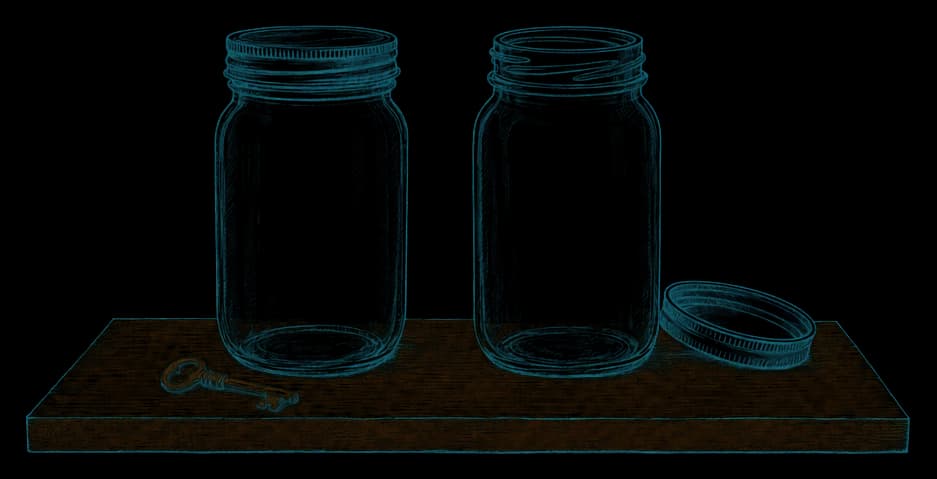
Almost everyone I meet has heard of both. Very few were ever told what the difference is. Here it is, without the jargon.
Both are containers, not investments
This is the first thing to unlearn. A TFSA and an RRSP are not things you buy. They are registered accounts: boxes the government lets you put savings or investments into, with tax rules attached to the box.
What goes inside the box is a separate decision. Cash, a GIC, a fund, and other investments can all sit inside either one. The box decides how the money is taxed. The contents decide how the money behaves.
The TFSA: pay tax first, never again
A Tax-Free Savings Account works like this:
- You put in money you have already paid income tax on.
- Whatever it earns inside the account is not taxed.
- When you take money out, it is not taxed, and it does not count as income.
- The room you used comes back the following calendar year, so a withdrawal does not permanently shrink your limit.
Because withdrawals are simple and do not affect your income, a TFSA is flexible. It suits goals with a shorter or uncertain timeline as well as long ones.
the name is the worst thing about it
The RRSP: defer tax now, pay it later
A Registered Retirement Savings Plan flips the order:
- Money you put in reduces your taxable income for that year, so you may get some tax back.
- Whatever it earns inside is not taxed while it stays in.
- When you take money out, it is taxed as income in that year.
The design assumes you will withdraw in retirement, when your income, and therefore your tax rate, may be lower than it is now. That is where the benefit comes from. Withdrawing early usually means paying tax at your current rate and, unlike a TFSA, the room does not come back.
There are two programs that let you borrow from your own RRSP without tax for a first home or for education, with a repayment schedule. They are worth knowing about; they are explained in the first-home guide.
The question that usually decides it
The honest answer to "which one first?" depends on your situation, and I cannot answer it for you on a web page. But the question that does most of the work is this:
Is your income likely to be higher now than when you take the money out?
If yes, the RRSP's tax deferral is doing something for you. If your income is modest today, or likely to rise a lot, the TFSA's simplicity often matters more, and the RRSP room is still there for later. Many families use both, in a sequence that changes as income changes.
Things newcomers get caught by
- Room starts when you become a resident. TFSA room does not backdate to years before you arrived in Canada. RRSP room is built from earned income reported on a Canadian tax return.
- Over-contributing is penalised. The CRA charges a monthly penalty on excess amounts. Check your room in CRA My Account before contributing, especially if you have moved money between institutions.
- A TFSA is not "tax-free" everywhere. If you are also a tax resident of another country, that country may tax it. This is a question for an accountant who knows both systems.
What I got wrong
I saved every month for seven years into fixed deposits and a savings account before I understood that saving and investing are different jobs. The account type was never the problem. Not knowing what the account was for was the problem. Start there.
Questions people ask
- Is a TFSA a savings account?
- No. The name is misleading. A TFSA is a container that can hold cash, GICs, funds or other investments. What makes it special is how it is taxed, not what is inside it.
- Do I need to be a Canadian citizen to open a TFSA or RRSP?
- No. You need to be a resident of Canada for tax purposes with a Social Insurance Number, and for a TFSA you must have reached the age of majority in your province.
- Can I have both?
- Yes. Many people do. They serve different purposes, and using both is common once there is room in the budget.
- Where do I find my contribution room?
- In your CRA My Account, under the RRSP and TFSA sections. That figure is the one to trust, not a calculation from memory.
that's my two cents. educational only, not advice.
Want to know what applies to you?
The Cents Check is 14 plain questions and a short read on what to learn first.